

It is 2 a.m. and an unmistakable sound wakes you up: your cat, hunched over on the bedroom rug, working through a bout of stomach upset. By morning, they are back to grooming and napping in a sunbeam as if nothing happened, and you are left wondering whether that was normal or something worth calling the vet about. Cat vomiting is one of the most common calls we get at Shawsheen Animal Hospital, and the honest truth is that context matters more than the vomiting itself.
A single episode after a big meal or a stray hairball rarely means much, but a pattern that keeps repeating, or a cat who seems off in other ways, tells a very different story. Keep reading to learn what separates a harmless, one-off episode from the kind of cat vomiting that deserves a closer look, what the appearance of the vomit can reveal, and when it is time to stop watching and start scheduling an appointment.
Why Is My Cat Throwing Up?
Cat vomiting has a wide range of possible explanations, from minor and easily explained to conditions that require prompt veterinary care. Understanding the general categories can help you judge how urgently to seek help and what to mention during an appointment, since timing, frequency, and diet all factor into the bigger picture.
Common Causes of Cat Vomiting
A number of everyday situations can trigger an isolated episode without pointing to anything serious, and most cats will experience at least one of these at some point in their life.
- Hairballs, especially in longer-haired cats or heavy groomers
- Eating too quickly or overeating in one sitting
- A sudden change in food or a new treat that does not agree with them
- Mild stomach upset from something eaten outdoors or off the counter
These everyday causes of cat vomiting typically resolve on their own within a day, though it is still worth keeping an eye on your cat during that window to make sure nothing else develops.
Acute Versus Chronic Vomiting
Acute cat vomiting refers to a sudden episode or short cluster of episodes, while chronic vomiting describes a pattern that recurs over weeks or months. Chronic cat vomiting is more likely to point toward an underlying condition such as inflammatory bowel disease, food sensitivities, kidney disease, hyperthyroidism, or other issues that benefit from a thorough veterinary workup rather than a wait-and-see approach.
Many cat owners assume occasional vomiting is simply part of having a cat, but a pattern that repeats month after month is worth mentioning at a wellness visit even if each individual episode seems mild. Older cats in particular can develop chronic conditions gradually, so a slow increase in vomiting frequency over several months is often more telling than any single episode.
What Does Your Cat’s Vomit Look Like?
The appearance of cat vomiting can offer real clues about what might be going on, which is why veterinarians often ask detailed questions about color, texture, and contents during an appointment.
Color and Consistency Clues
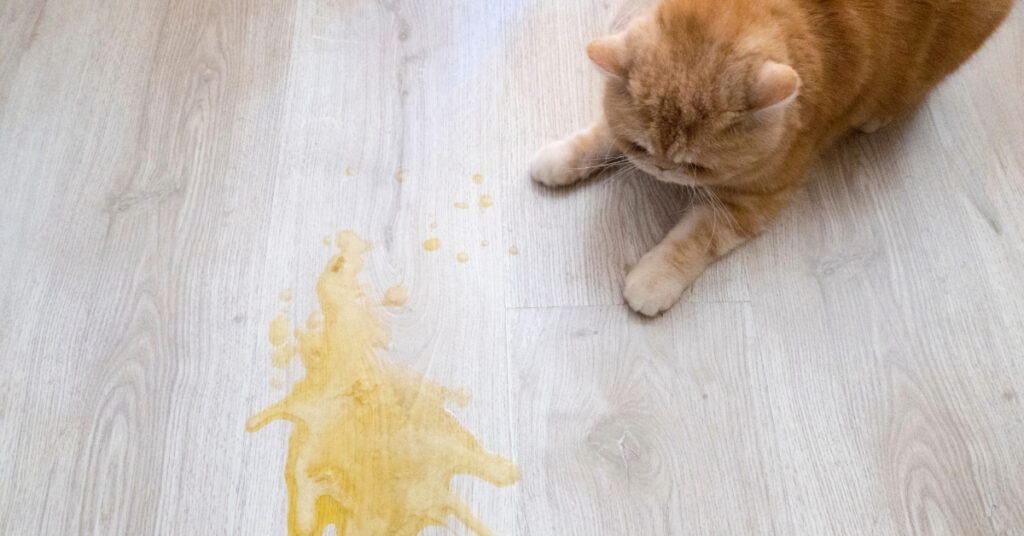
Clear or foamy vomit often points to an empty stomach or mild irritation, while yellow, bile-tinged vomit can suggest the cat has not eaten recently or has a more sensitive digestive system. Food that looks only partially digested may mean the cat ate too quickly or that something is slowing digestion further down the tract.
Undigested food brought up shortly after eating is different from food that appears hours later, and that timing detail can help your veterinarian narrow down the cause. Grass or plant material mixed into the vomit is also common and, on its own, is not usually a cause for concern.
Cat Vomiting Symptoms to Look Out For
Beyond the vomit itself, several accompanying symptoms are worth tracking closely:
- Blood in the vomit, whether bright red or resembling coffee grounds
- Repeated vomiting within a short period of time
- Vomiting alongside diarrhea, lethargy, or appetite loss
- Visible weight loss over several weeks despite normal eating
Because cat vomiting rarely happens in a vacuum, noting any of these accompanying signs gives your veterinarian a much clearer starting point for narrowing down the cause.
When To Worry About Vomiting in Cats
While an occasional episode of cat vomiting is usually not an emergency, certain situations call for a same-day veterinary visit rather than a wait-and-see approach at home.
Red Flags That Need Prompt Attention
A handful of warning signs signal that a cat needs to be seen right away rather than monitored from home.
- Repeated vomiting within a single day
- Vomiting combined with lethargy or a visibly swollen abdomen
- An inability to keep water down
- Any known exposure to a toxic plant, food, or chemical
Blood in the vomit or vomit that looks like coffee grounds also warrants prompt attention from Shawsheen Animal Hospital or an emergency clinic, since these signs can point to internal bleeding or a more serious underlying issue.
When Persistent Vomiting Still Matters
Even cat vomiting that seems mild can be worth a veterinary visit if it recurs more than once or twice a month, since chronic low-grade vomiting is sometimes dismissed as normal cat behavior when it is actually a sign of an underlying condition that benefits from earlier treatment and monitoring over time. A simple log of when episodes happen, what your cat ate beforehand, and what the vomit looked like can make a real difference during that conversation with your veterinarian.
How Veterinarians Diagnose and Treat Cat Vomiting
Because so many conditions can cause cat vomiting, an accurate diagnosis usually depends on a combination of history, physical exam, and targeted testing rather than guesswork based on symptoms alone.
The Diagnostic Process
Your veterinarian will typically ask about diet, recent changes, litter box habits, and the timing and appearance of the vomiting episodes, then perform a physical exam that may include palpating the abdomen for pain, masses, or other abnormalities. Bloodwork, urinalysis, imaging such as X-rays or ultrasound, and occasionally more specialized testing may be recommended depending on what the initial findings suggest about the underlying cause. In some cases, a food trial or additional monitoring at home may be part of the workup as well, particularly when the vomiting is intermittent and difficult to reproduce during a single visit.
Treatment Approaches
Treatment for cat vomiting depends entirely on what is causing it. Mild, isolated cases are often managed with simple dietary adjustments and monitoring, while chronic or more serious cases may require medication, a specialized diet, or ongoing management tailored to the diagnosis and your cat’s individual needs.
Some cats benefit from smaller, more frequent meals or a slow-feeder bowl to reduce the speed at which they eat, which can make a meaningful difference for cats whose vomiting is tied to eating too quickly. Our team at Shawsheen Animal Hospital can walk you through the specific plan that fits your cat’s situation once testing points to a clear cause.
Helping Your Cat Feel Better
Cat vomiting is common enough that it is easy to brush off, but persistent or unusual episodes deserve a closer look rather than being written off as normal. Paying attention to frequency, appearance, and any accompanying symptoms gives you and your veterinarian the clearest picture of what is happening, and that information often shortens the path to an accurate diagnosis. If your cat’s vomiting seems out of the ordinary or has been going on for more than a day or two, schedule a visit with Shawsheen Animal Hospital so our team can pinpoint the cause and help your cat feel like themselves again. Call us at (978) 851-5558 or book an appointment online today!