
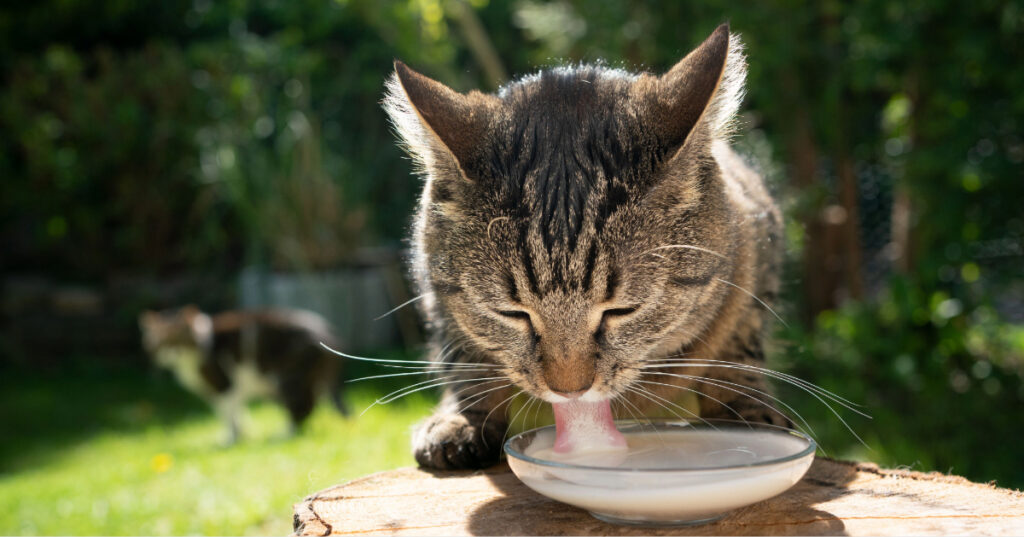
A saucer of milk for the family cat is one of the most enduring images in pop culture, showing up in cartoons, storybooks, and old movies alike. But can cats drink milk safely, or is this classic scene actually setting cats up for an upset stomach? At Shawsheen Animal Hospital, this is one of the most common nutrition questions we hear from cat owners, and the honest answer is more nuanced than a simple yes or no. Understanding the biology behind why cats drinking milk is such a persistent myth can help you make better choices for your own cat’s diet and treats. This article walks through whether milk is actually good for cats, why so many cats are lactose intolerant, whether milk alternatives are any safer, what kittens can and cannot have, and what to offer your cat instead.
Is Milk Good for Cats?
Despite the popular image, “Can cats drink milk without consequence?” is a question with a fairly clear answer for most adult cats: not really, and not in the way most people assume.
Why the Milk Myth Persists
The idea that cats love and need milk likely comes from farm cats drinking fresh, unpasteurized milk straight from the source, along with decades of cartoons and advertising reinforcing the image. Store-bought cow’s milk, however, is quite different from what a barn cat might have lapped up generations ago, and most adult cats simply are not built to digest it well. The myth has stuck around for so long partly because a cat lapping up a bowl of milk makes for such a charming, familiar picture, even though the reality is far less pleasant for the cat’s digestive system. Even farm cats historically dealt with some digestive discomfort from raw milk, but the myth glossed over that detail in favor of the cozy image that stuck in popular culture.
What Milk Actually Offers Nutritionally
Cow’s milk does contain some protein, fat, and calcium, but it is not nutritionally complete for cats and offers nothing that a proper cat food does not already provide in a more balanced form. Relying on milk as a treat also adds unnecessary calories and fat to a diet that should be built around species-appropriate nutrition. For cats already managing their weight, this extra caloric load can add up quickly over time, even if a single saucer seems harmless in the moment. So when people ask, “Can cats drink milk as a nutritional supplement?”, the honest answer is that it simply is not necessary for a healthy cat eating a complete diet.
Is Your Cat Lactose Intolerant?
Most cats lose much of their ability to digest lactose after weaning, which is a major reason whether cats can drink milk safely is such a common point of confusion for owners.
Why Kittens Handle Milk Differently
Kittens produce an enzyme called lactase that allows them to digest their mother’s milk efficiently, but production of this enzyme naturally declines as they mature into adulthood. By the time most cats reach adulthood, they have little lactase left, making lactose much harder to break down. This decline happens gradually, which is part of why some cats can tolerate small amounts of dairy while others react strongly even to a small taste. The exact timeline varies from cat to cat, but most of the decline happens within the first several months of life as kittens transition away from nursing.
Signs of Lactose Intolerance
A handful of telltale symptoms can help you recognize whether your own cat falls into the lactose-intolerant majority.
- Diarrhea within a few hours of drinking milk
- Vomiting or stomach upset after dairy consumption
- Excessive gas or bloating
- Visible discomfort or reluctance to eat afterward
If your cat shows any of these signs after dairy, it is a strong indicator that their body simply is not equipped to process lactose well, regardless of how much they seem to enjoy the taste. Some cats will happily drink milk and show no visible symptoms, which can be misleading since mild internal discomfort is not always obvious to an owner.
Can Cats Drink Milk Alternatives?
Given the digestive issues tied to regular dairy, many owners wonder whether cats can drink milk alternatives instead, such as lactose-free or plant-based options marketed for pets.
Lactose-Free Cat Milk Products
Several brands now make lactose-free milk specifically formulated for cats, which removes the lactose that causes digestive upset while still offering a milk-like treat. These products are generally considered a safer occasional option than regular cow’s milk, though they should still be treated as a treat rather than a dietary staple. Reading the label carefully still matters, since added sugars or flavorings in some products can offset the benefit of removing lactose. So while cats can drink milk in this specific lactose-free form with far less risk, moderation is still the key word.
Plant-Based Alternatives to Approach With Caution
Not every alternative marketed to humans translates well to a cat’s digestive system or nutritional needs, so the question of “Can cats drink milk alternatives?” deserves a closer look at each option individually.
- Almond milk, which offers little nutritional value for cats
- Soy milk, which can be harder for cats to digest
- Oat milk, often high in added sugars
- Coconut milk, which is high in fat and best given sparingly if at all
Because many plant-based milks are formulated for human taste preferences rather than feline nutrition, they are not a meaningful substitute for a cat’s dietary needs even when they happen to be lactose-free.
Can Kittens Have Milk?
Kittens rely entirely on their mother’s milk or an appropriate kitten formula during their earliest weeks, but the question of “Can cats drink milk?” shifts considerably once weaning begins.
Nursing and Weaning Basics
Newborn kittens should nurse from their mother whenever possible, since her milk provides antibodies and nutrients that formula cannot fully replicate. If a kitten is orphaned or a mother cannot nurse, a veterinarian-approved kitten milk replacer, not cow’s milk, is the appropriate substitute during that stage. This distinction matters because cow’s milk lacks the concentration of nutrients a growing kitten actually needs during such a critical developmental window. Owners asking “Can cats drink milk?” during this early life stage should understand that mother’s milk and a proper replacer are the only appropriate options, not any product pulled from the refrigerator.
Why Cow’s Milk Is Not the Answer
Cow’s milk lacks the specific nutrient balance kittens need and can cause digestive upset even in very young cats, since kittens are just as susceptible to the wrong type of dairy as adult cats are. If you are caring for an orphaned or bottle-fed kitten, Shawsheen Animal Hospital can guide you toward an appropriate feeding plan rather than improvising with products meant for a different species.
What to Offer Your Cat Instead
Fresh water should always be a cat’s primary beverage, and for cats who seem uninterested in drinking enough, a pet fountain or wet food can help increase overall fluid intake without the digestive risks tied to dairy. Some cats respond well to a small amount of water flavored with a splash of low-sodium broth, which can encourage extra hydration without any of the concerns that come with dairy products.
Once you understand why cats drinking milk is more myth than fact for most adult cats, it becomes easier to skip the saucer altogether and stick with options that actually support their health. If you have questions about your cat’s diet or hydration habits, call us at (978) 851-5558 or book an appointment online today. Our team at Shawsheen Animal Hospital is happy to help you find the right approach for your individual cat.